


Juggling Chaos

  • Juggling ChaosJuggling Chaos
  • Articles
    • AI
    • CMS
      • WordPress
      • Umbraco
      • SilverStripe
      • ProcessWire
      • MODX
      • Microweber
      • Joomla
      • Grav
      • Ghost
      • Drupal
    • Cybersecurity
    • Digital Data
    • Digital Marketing
    • Email Marketing
    • Influencers
    • Pay-Per-Click
    • User Centralized Marketing
    • SEO
    • Social Media
      • Facebook
      • Instagram
      • LinkedIn
      • Pinterest
      • SnapChat
      • TikTok
      • Twitter
      • YouTube
    • Text Message Marketing
  • Resume
    • Certifications
    • Portfolio PDF
  • Privacy Policy
    • Opt-out preferences
    • Cookie Policy
  • Contact Us
  • Videos
  • Free SEO Tools
  • Privacy Policies Watch
  • Search

parental controls

TikTok Family Pairing: What Parents Can Control

TikTok Family Pairing: What Parents Can Control

September 23, 2026Kids Online Safety, TikTokFamily Pairing, kids privacy, parental controls, TikTokLeave a comment

TikTok Family Pairing links your TikTok account to your teen’s so you can set screen time, a private account, who can message them, and Restricted Mode. Your teen can make those limits stricter. They cannot loosen a limit you set. That is the whole point of the link, and it only exists after both accounts are paired.

This guide is for parents and guardians of teens, and for a grandparent who was added as the adult on the account. Steps were taken from TikTok’s Family Pairing help page on September 23, 2026. If a button has moved, use that page. Do not follow a setup video from a stranger.

What Family Pairing can control

TikTok says you can link accounts and set controls that include:

  • Daily screen time. For teens 13 to 17, TikTok says this is on by default at one hour. You can set the limit from your account, apply one limit to all of the teen’s devices, and use a passcode if you want to allow more time after the limit.
  • A screen time dashboard with time spent and how often the app was opened, for the last four weeks.
  • Time away. A recurring block when TikTok is unavailable. The teen can ask to keep using it during that block.
  • Muted notifications. On by default. TikTok says 13 to 15 is muted from 9 p.m. to 8 a.m., and 16 to 17 from 10 p.m. to 8 a.m. A custom schedule that overlaps the default does not win. TikTok’s example: if you set 11 p.m. to 7 a.m. for a 13-year-old, the default 9 p.m. to 8 a.m. still overrides the overlap.
  • Keyword filters and hashtags to keep out of supported feeds, and whether the teen can use search.
  • Restricted Mode, which limits content that may not be appropriate.
  • Discoverability. Private or public. A private account means the teen approves followers.
  • Direct messages. Who can send messages or requests. TikTok says direct messaging is only available at 16 and older.
  • Comments, liked posts, and reuse of their videos, including Duet, Stitch, stickers, and Stories.
  • Suggest account to others, so the account is not recommended.
  • Blocked accounts you do not want them to interact with. This block tool is not available everywhere.
  • STEM feed, where that feed exists. TikTok says it is not available everywhere.

Restricted Mode and the daily screen time limit also stop the teen from logging out or switching accounts in the TikTok app. That matters. A second account is the usual way around a limit. It does not stop them from using a friend’s phone.

Family Pairing is not a transcript. You can see follower and following lists, blocked accounts, and a summary of time. You should not expect to read their messages inside Family Pairing. If you need message content, you are in the wrong tool, and reading a private chat you were not invited into is a trust problem, not a setting.

Link the accounts

TikTok’s setup path, checked September 23, 2026:

  1. In TikTok, tap Profile at the bottom.
  2. Tap the Menu button at the top, then Settings and privacy.
  3. Tap Family Pairing.
  4. Tap Continue.
  5. Tap Parent or Teen, then Next.
  6. Follow the steps to link the accounts. Do this with the teen in the room. A link they do not know about will not survive the first fight.

To change settings later: Profile, Menu, Settings and privacy, Family Pairing, then the account you want to manage.

TikTok’s minimum age is part of the safety system. Do not help a younger child fake a birthday to get into the main app. TikTok has a separate under-13 experience. Use that, or do not use TikTok. A false age turns off the default hour limit and the night mute that exist because of the real age.

Settings worth turning on the first day

  1. Set the account to private unless you have a specific reason not to.
  2. Leave the one-hour default, or set a lower one. Raise it later if homework and sleep are fine.
  3. Leave the night notification mute. Do not “fix” it with a shorter window that overlaps the default. TikTok says the default wins.
  4. Turn Restricted Mode on for a younger teen.
  5. Turn search off if the For You page is already more than they need.
  6. Set direct messages to no one, or to friends, if the teen is 16 or older and messages are available. Under 16, TikTok says direct messaging is not available. Confirm that on their account rather than assuming.
  7. Turn off “suggest account to others” if you do not want strangers finding them from a video.
  8. Set who can comment, and who can reuse their videos, to friends or to no one.

Then open the screen time dashboard once a week, not every hour. You are looking for a sudden jump, not policing a normal afternoon.

Blocking, reports, and what still leaks through

If you block an account for your teen, TikTok says the blocked person is not told. You also cannot search for and block someone who has already blocked you. Your teen can still meet that person in a multi-host LIVE, a shared group chat, or when someone else reuses a video. Say that out loud so a block does not feel like a promise you broke.

The block tool is not in every country. If you do not see it, do not install a third-party blocker from an ad.

If your teen reports a video, they can choose to notify you in your inbox when the accounts are linked, or by email if they are not. They do not have to. A report is not automatically a crisis, and it is not automatically nothing. Ask what happened. TikTok’s Guardian’s Guide is the place for that conversation, not a comments section.

What to skip

  • Do not pair your account and then never open Family Pairing. Defaults help. They are not a plan.
  • Do not use your teen’s password to change settings from their phone. They can change them back, and you have taught them that passwords are shared.
  • Do not turn off Restricted Mode and screen time so they can log out and “use a school account.” Those two settings are what stop account switching.
  • Do not download TikTok from a link in a text. Use the App Store or Google Play.

Checklist

  • Both accounts show the real ages.
  • Family Pairing is linked, and the teen knows it.
  • The account is private.
  • Screen time is at or below the one-hour default, on purpose.
  • Night notification mute is still on.
  • Search, messages, comments, and reuse are set tighter than the app’s widest option.
  • You know the teen can add restrictions and cannot remove yours.

What this means for you

A parent should pair the accounts before the first viral video, not after a stranger comments. The teen can still make the account stricter than you did. Let them. That is a good sign.

If a grandparent is the paired adult because the parent does not use TikTok, the grandparent needs the login and the habit of opening Family Pairing. An unused parent account helps no one.

An adult child helping an older relative who uses TikTok should not put that relative into Family Pairing as the “teen.” Family Pairing is for a teen account. For an older adult, the useful steps are a private account, no links in messages, and the pop-up rule in how to spot a fake tech-support pop-up.

Phone-level limits still matter. Family Pairing does not cover Safari or Chrome. Use Screen Time or Family Link for the device.

FAQ

Can my teen undo the screen time limit?

TikTok says teens can make restrictions stronger and cannot reduce restrictions you set. They can ask for more time. You do not have to say yes.

Can I read their messages?

Family Pairing lets you decide who can send direct messages. It is not a tool for reading the conversation. Direct messages are only available at 16 and older, according to TikTok’s help page.

Why did my custom bedtime not work?

TikTok says the default mute window overrides a custom time that overlaps it. For ages 13 to 15 that default is 9 p.m. to 8 a.m. For 16 and 17 it is 10 p.m. to 8 a.m.

Does this cover a second TikTok account?

Restricted Mode and the daily limit stop logout and account switching inside the app. They do not stop a different phone. If you see a second account, talk about it. Do not install spyware to hunt for it.

Sources

  • TikTok Support, “Family Pairing,” support.tiktok.com Family Pairing, accessed September 23, 2026.
  • TikTok Support, “For parents and guardians,” support.tiktok.com for parents and guardians, accessed September 23, 2026.

Photo: a teenage girl using a smartphone, by Karolina Grabowska / Kaboompics, via Pexels. Pexels License.

This is not legal advice. TikTok’s age rules and features differ by country. If a control is missing, it may not be offered where you live.

Update this guide if TikTok changes the default screen time, the night mute hours, the direct-message age, or the Family Pairing menu path.

YouTube Kids and Supervised Accounts for Parents

YouTube Kids and Supervised Accounts for Parents

September 23, 2026Kids Online Safety, YouTubeFamily Link, kids privacy, parental controls, YouTube KidsLeave a comment

YouTube and YouTube Kids are not the same app. YouTube Kids is a separate, smaller library. A supervised YouTube account is the main YouTube app with a content level a parent picks. Restricted Mode is a filter on regular YouTube, and it is weaker than either of those. Most families need one of the first two, not a normal login with the sound turned down.

This guide is for parents and grandparents. Steps were checked on Google’s family help pages on September 23, 2026. Availability depends on country. If a control is missing, the feature may not be offered where you live. Do not invent a workaround. Use YouTube Kids, or watch together.

Pick one of three setups

Google describes two supervised options when you manage a child’s Google Account with Family Link, plus Restricted Mode for older kids.

  • YouTube Kids. A separate app and website with a smaller set of videos. You choose a content level, and you can turn search off. This is the right start for a young child.
  • Supervised kid account on YouTube. For a child under 13, or the applicable age in your country, who is ready to leave YouTube Kids. You pick a content setting. Google’s Family Link page lists three: Older kids, Teens, and Older teens.
  • Restricted Mode. An optional filter on regular YouTube. Google says parents of teens 13 or older who have added supervision can use it to screen potentially mature content. It is also what schools and libraries often turn on. It is not a kids’ product.

Google’s FAQ draws the line clearly. Restricted Mode tries to screen adult content. A supervised child account is a different, tighter experience for a child under 13. Do not tell yourself they are the same.

Family Link does not supervise an iPhone as a device. YouTube controls still depend on whose Google Account is signed in. If a child watches YouTube on an iPad while signed into your account, they see your recommendations and your history. Sign them into their own supervised account, or use YouTube Kids with a profile you created. The device lock for an iPhone or iPad is Screen Time. The account lock for Android is Family Link.

Set up YouTube Kids

Google says you have to set up YouTube Kids before the child can use it. In the Family Link app, as of September 23, 2026:

  1. Open Family Link and select the child.
  2. Tap Controls, then YouTube.
  3. Under YouTube Kids settings, set the content level, turn Search on or off, or remove access.

You can reach a similar screen in the YouTube app: profile picture, Settings, Family Center, then the child. Search is the setting most parents miss. With search on, a child can hunt for videos outside the rows you expected. Turn search off until you have watched how they use the app.

YouTube Kids is not magic. A video made for children can still be loud, creepy, or a toy ad. Block a video when that happens. Google notes that a block or unblock in YouTube Kids also applies to the child’s supervised YouTube account, if they have one.

Set up a supervised YouTube account

Google says you can set up a supervised experience for a child under 13, or the applicable age where you live. If the child is over that age and chooses to manage their own account, you will not be able to supervise YouTube with these controls.

In Family Link:

  1. Open Family Link and select the child.
  2. Tap Controls, then YouTube, or YouTube Family Center.
  3. Under YouTube settings, tap Edit.
  4. Choose the content setting and tap Select.

In the YouTube app: profile picture, Settings, Family Center, the child, What they can watch, Content setting, then Select.

General settings in the same Family Link screen can pause watch history, pause search history, turn off autoplay, clear history, and unblock videos. Google says you can only block or unblock videos if YouTube Kids is set up, and the block list is shared with the supervised account.

To review watch history, Google says you must be on the child’s device. Family Link does not hand you a full viewing diary on your own phone. Sit with the child and look together.

A warning before you supervise an existing account

If you add supervision to an existing Google Account for a child under 13, or the applicable age, Google says it deletes subscriptions and this content on the account:

  • YouTube videos, chats, and comments
  • Live chats, posts, playlists, and stories
  • Purchased and rented YouTube videos

Google recommends that the child download their data first. Do not tap through that screen on a shared family account. You can wipe purchases and uploads. Create a new child account if the current login is actually yours.

What changes at 13

Google says that once a child turns 13, or the applicable age in your country, they get YouTube without that supervised kid experience. You can still turn Restricted Mode on or off from Family Link if supervision remains: open Family Link, select Controls, then YouTube, and switch Restricted Mode.

Restricted Mode is a filter, not a wall. Pair it with a private account habit on other apps, and with a time limit. Sleep mode and app limits belong in Family Link or Screen Time, not in a hope that YouTube will stop itself.

A teen who wants TikTok or Instagram next needs those apps’ own tools. YouTube’s content level does not follow them there. See TikTok Family Pairing and Instagram Teen Accounts.

What to skip

  • Do not sign a young child into your YouTube account to “keep it simple.” Your history and recommendations become theirs, and theirs become yours.
  • Do not treat Restricted Mode as YouTube Kids. Google describes them as different tools.
  • Do not add supervision to an existing under-13 account until you have read the deletion warning and saved anything the family paid for.
  • Do not download a “YouTube for kids” app from an ad. Use the YouTube Kids app from the official store, or the setup inside Family Link.

Checklist

  • The child has their own Google Account, not yours.
  • A young child is on YouTube Kids, with search off until you decide otherwise.
  • An older child under the local age cutoff is on a supervised YouTube content level you picked on purpose.
  • You know that blocking a video in YouTube Kids also blocks it on the supervised account.
  • You did not supervise an existing account without reading the deletion list.
  • At 13, you have a plan for Restricted Mode and for time limits, because the kid supervision experience ends.

What this means for you

A parent should pick the strictest option the child can still use for school and the one show they care about. You can loosen a content level later. Starting wide and trying to claw it back is harder, because the child has already seen the rest of the library.

A grandparent’s tablet should not stay signed into the grandparent’s YouTube. Make a YouTube Kids profile before the visit, or let the child watch one show you start yourself and then put the tablet away.

An adult child setting this up for a parent’s household should leave the parent’s own YouTube login alone. The job is a separate kids’ profile, not a lockdown of the grandparent’s account.

FAQ

Is Restricted Mode enough for a 7-year-old?

No. Google describes Restricted Mode as a filter for people who want less mature content on regular YouTube. YouTube Kids or a supervised kid account is the tool for a young child.

Can I see everything my child watched, from my phone?

Not as a full history in Family Link. Google says you review watch history on the child’s device. You can pause watch history and search history from Family Link.

What if YouTube Kids is not in my country?

Google says to check where YouTube Kids and supervised accounts are available. If the control is missing, do not rely on a random third-party app. Watch with the child, or do not leave them signed in alone.

Will this stop autoplay of the next video?

Family Link has a Disable autoplay switch under general YouTube settings. Turn it on. Autoplay is how a short visit becomes a long one.

Sources

  • Google For Families Help, “Understand YouTube & YouTube Kids options for your child,” support.google.com/families/answer/10495678, accessed September 23, 2026.
  • YouTube Help, “Get started with supervised accounts,” support.google.com/youtube/answer/10314074, accessed September 23, 2026.
  • YouTube Help, “FAQ about supervised child accounts,” support.google.com/youtube/answer/10315824, accessed September 23, 2026.

Photo: a child using a tablet, by Walden Kirsch / Intel Free Press, CC BY-SA 2.0, via Wikimedia Commons.

This is not legal advice. The age at which a child can hold their own Google Account differs by country. If a menu has moved, use Google’s help page.

Update this guide if Google renames supervised content levels, changes what is deleted when supervision is added, or changes the age when kid supervision ends.

Roblox Parental Controls Parents Should Turn On

Roblox Parental Controls Parents Should Turn On

September 23, 2026Cybersecurity, Kids Online Safetygaming safety, kids privacy, parental controls, RobloxLeave a comment

Roblox parental controls can limit which games a child plays, who they chat with, how much they spend, and how long they stay on. None of that works until a parent account is linked to the child’s account. A setting changed on your own avatar does not follow your child.

This is a parent and caregiver guide. It also notes what an adult child can check if a grandparent bought the Robux. Paths were taken from Roblox Support on September 23, 2026. Roblox moves these menus. If a label is missing, open the help article linked below instead of guessing.

Link the accounts before you change anything

Roblox says you need a Roblox account with parent privileges, linked to the child’s account. After that, you can manage controls on Roblox.com and in the mobile app, and you can see insights such as daily screen time and on-platform connections.

Creating parent privileges asks for your birthday and an age check. Roblox’s help page says that check can be facial age estimation, a government ID, or a credit card. This guide will not walk through how to pass or fail that check. Use your own information. A false age on the child’s account is how chat and spending limits get skipped.

If you already have a Roblox account, Roblox says you can add parent privileges and link the child from that account. To unlink later: Settings, Parental Controls, select the child, pencil icon, Unlink accounts. Unlinking removes your ability to approve actions, control privacy, and set screen time or spending limits. Do not unlink to “test” something during a school night.

Roblox says that in most regions, parents can manage all settings through age 12. Some controls, including game management and Direct Chat, can be managed through age 15. Confirm the ages on the help page for your region. Do not assume a 16-year-old’s account still accepts every parent lock.

Set content maturity, then block specific games

Roblox Kids and Roblox Select accounts only offer a set of age-appropriate games. Inside those, you can still tighten or loosen the maturity slider, and you can block or allow a single game.

To change content maturity, Roblox’s overview gives this path:

  1. Go to Settings.
  2. Go to Parental Controls and select the child’s account.
  3. Open Settings you manage.
  4. Select Content restrictions, then Content maturity.
  5. Move the slider. A short description appears under the level you pick.

Restricted games are only for users who are 18 and age-checked. Roblox’s label guide, checked the same day, describes four labels:

  • Minimal: occasional mild violence, light unrealistic blood, or occasional mild fear.
  • Mild: repeated mild violence, heavy unrealistic blood, mild crude humor, or repeated mild fear.
  • Moderate: moderate violence, light realistic blood, moderate crude humor, unplayable gambling content, or moderate fear.
  • Restricted: strong violence, heavy realistic blood, romantic themes, alcohol, strong language, and related themes. Access is limited to 17+ age-verified users. The overview page said 18+ for Restricted games. The label section said 17+ age-verified. Treat both as “not for a child,” and do not lower the slider to chase a popular game.

Games primarily about sensitive social, political, or religious issues are off by default for users under 13. Leave that off unless you have a reason and have read the description.

To block one game even if the maturity slider would allow it:

  1. Settings, Parental Controls, the child’s account.
  2. Content restrictions, then Blocked games.
  3. Tap the + icon, search the game name, then Block and confirm.

Roblox says a blocked game can still appear in search. If you block it while the child is playing, the block starts the next time they enter. To allow a game that is not in the default set, approve it from the email request or from Pending requests. You can revoke that later from Allowed games.

Turn chat down before you turn spending down

Communication controls decide how the child can chat. Roblox says these settings do not apply to chat features that a game developer built on their own. A game can still have a custom chat that your Roblox setting does not cover. If a game feels too open, block the game.

For game chat, the help page path is Settings, Parental Controls, Communication. The controls listed there include:

  • Game chat with other users in a similar age group, inside that game. Users under 9 need parental consent to turn game chat on.
  • Game direct chat, the “/w” whisper inside a server. Roblox says this is only with other age-checked users in a similar age group, and users under 13 need parental consent.
  • Friends chat with people the child has added.

Party chat is only for age-checked users over 13 in similar age groups. Under Visibility & private servers, Private Servers can be set to Connections or Off, which limits whose private servers the child can join and who can join theirs.

You can also open Connections, Manage, and block or report someone on the child’s list. Roblox says a blocked user cannot direct-chat or add the child again without your permission. That is worth doing when a name shows up that the child cannot explain.

Set a monthly spend limit and a daily time limit

Spending controls are under Settings, Parental Controls, Settings you manage, Spending restrictions. You can set a monthly limit on Robux and on subscriptions to individual games. Roblox says the limit resets at the end of the calendar month and does not roll over. It does not cover gift card redemption. A gift card from a birthday party can still be redeemed. If that matters, hold the card yourself.

High-spend notifications are on by default for linked parents. Roblox says you should be notified after $100, $250, and $500 of spend in a month, or the local equivalent, and after $500 you should be notified every ten transactions. Turn on a notice for every transaction if the child is young. A monthly cap of zero is a valid choice.

Screen time is separate from the phone’s own limit. On Roblox: Settings, Parental Controls, Screen time, Manage, Screen time limit, then a Daily limit. When the child hits it, Roblox says they see a message and cannot use Roblox for the rest of that day. The same screen shows the top games from the last week. Read that list. It tells you more than the maturity slider does.

Phone-level limits still help. Family Link or Screen Time can stop the app when Roblox’s own timer is not enough. Those guides are Google Family Link and iPhone Screen Time.

What to skip

  • Do not buy Robux on the child’s account “so they do not bother you,” and then never open Spending restrictions.
  • Do not turn on every chat type because a friend is waiting. Under-9 and under-13 chat needs your consent for a reason.
  • Do not assume a blocked game disappears from search. Tell the child it may still show up and will not open.
  • Do not share your parent login with the child so they can approve their own requests.

Checklist

  • Parent account is age-checked and linked to the child.
  • Content maturity slider matches the younger child in the house, not the oldest.
  • Game chat and direct chat are off unless you have a reason to allow them.
  • Monthly spend limit is set. Gift cards are not in that limit, so you know where the cards are.
  • Daily Roblox screen time is set, and you have looked at top games.
  • You know how to block one game and one connection without unlinking the whole account.

What this means for you

A parent should link the account on a calm day, not after a charge appears. The first week, open top games and the connections list once. You are looking for a new name and a new game, not reading a diary. Roblox’s parent tools show connections and time. They are not a transcript of every chat line, and developer-built chat may sit outside the switch you set.

If a grandparent pays for Robux, show them the spending page the same day. An adult child can sit with them and set the monthly cap to a number the household can lose without a fight.

If something in a game scared the child, block that game and use the report option on the connection. Do not ask the child to “handle it in chat.”

FAQ

Do I need my own Roblox account?

Yes. Roblox says parental controls require a parent account linked to the child. Changing settings while logged in as the child is not the same thing, and the child can change them back.

Will I see every message?

No. You can manage chat types, see connections, and block or report a user. Roblox also says its communication settings do not cover chat that a game developer built separately. You should not expect a full transcript.

Why can my child still spend after I set a limit?

The monthly limit does not include gift card redemption. It also resets at the end of the calendar month. Check which account is linked. A second Roblox login on a tablet may never have been linked.

What ages can I still manage?

Roblox says that in most regions parents can manage all settings through age 12, and some controls through age 15. Check the current help page for your region before you promise a teen that you can still lock Direct Chat.

Sources

  • Roblox Support, “Parental Controls Overview,” en.help.roblox.com parental controls overview, accessed September 23, 2026.
  • Roblox Support, “Parental Controls FAQ,” en.help.roblox.com parental controls FAQ, accessed September 23, 2026.
  • Roblox, “Parental controls,” about.roblox.com/parental-controls, accessed September 23, 2026.

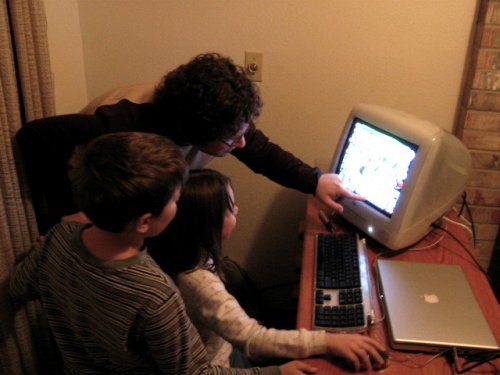
Photo: children at a computer, by jennie, CC BY 3.0, via Wikimedia Commons.

This is not legal advice. Roblox age rules and labels can differ by country. If a menu name has changed, use the Roblox Support link rather than an old screenshot.

Update this guide if Roblox changes the ages a parent can manage, the gift-card exception, or the content-label names.

Instagram Teen Accounts and Parent Supervision

Instagram Teen Accounts and Parent Supervision

September 23, 2026Instagram, Kids Online SafetyInstagram, kids privacy, parental controls, Teen AccountsLeave a comment

Instagram Teen Accounts are the default for ages 13 to 17. They start private, limit who can message the teen, blur suspected nudity in chats, and remind them to leave after an hour. Parent supervision is a second, optional step. Both of you have to agree. Either of you can turn it off, and the other person is told.

This guide is for parents and guardians. It will not pretend you can read a teen’s DMs, post as them, or reset their password. Instagram says you cannot. Steps and defaults were checked on Instagram’s help pages on September 23, 2026. The exact invite button differs by iPhone, Android, and browser, so this page describes the rules and points to Instagram’s setup article for the taps.

What a Teen Account already does

You do not have to turn Teen Accounts on. Instagram says new accounts for ages 13 to 17 start as Teen Accounts. The protections Instagram lists are:

  • Private account. New accounts for 13 to 17 start private. Teens under 16 need a parent’s permission to switch to public. Teens 16 and 17 can switch to public themselves, unless a parent is supervising. Existing accounts under 16 are set to private even if they used to be public. Existing public accounts for 16 and 17 are not forced private.
  • Messages. Only people they follow, or have connected with before, can message them.
  • Nudity protection in messages. Images detected as nudity are blurred. Instagram says this is not supported on desktop, web browsers, or Meta Quest. A teen on a laptop does not get that blur.
  • Tags, mentions, and remixing. Tags and mentions start limited to people they follow. Remixing starts limited to mutual followers.
  • Hidden words. Potentially offensive comments and message requests are hidden. The message-request piece is not supported on web or Meta Quest.
  • Content setting. Set to ages 13 and up, including posts from accounts they follow.
  • Sleep mode. On by default from 10 p.m. to 7 a.m. Notifications are muted, message auto-replies are on, and they see a reminder to close the app.
  • Daily time limit. A reminder after 60 minutes a day. A reminder is not a lock.
  • Live video. Off by default. Instagram says this is rolling out, so some teens may not have it yet.

Under 16, making these settings less protective needs a parent’s permission. At 16 and 17, the teen can loosen them, unless supervision is on. That is the reason to set up supervision even when the defaults look fine. Without it, a 16-year-old can flip the account to public and you will not get an approval request.

Instagram’s minimum age is 13. Do not help a younger child change a birthday to get in. A false age removes the Teen Account limits.

What supervision adds, and what it never shows

Supervision is optional. Instagram says both the parent and the teen must agree, only one parent can supervise a teen, and either person can remove it. The other person is notified. A parent can supervise more than one teen, but Instagram may limit how many, and a parent can only have one active invite link at a time. Invites expire after 7 days.

The parent must be over 18. The teen must be 13 to 17. Both need a current Instagram app. Instagram says some supervision features fail on an old app. A parent can also use instagram.com in a browser.

With supervision, Instagram says a parent can:

  • Set time limits. The 60-minute reminder is not the same as a limit you set.
  • Approve or deny a request to make safety settings less protective.
  • See insights, including which accounts the teen has chats with. Not the chats.
  • See who the teen follows, who follows them, and who they block.
  • See whether the account is private, who can message them, and who can add them to a group.
  • Make some Teen Account settings stricter, or allow the teen to manage those settings themselves.

Instagram says a supervising parent cannot see search history, cannot see chats, cannot post for the teen, and cannot reset the password. If a site or an app claims it can, it is not Instagram supervision. Do not install it.

Instagram’s help page, checked September 23, 2026, also says you can no longer see or manage a teen’s Threads profile through Instagram supervision. That change was scheduled to start in November 2025. Threads has its own limits. Do not assume an Instagram link covers it.

How the invite works

Instagram’s setup article says either the teen or the parent can send the invite. Supervision starts when the other person accepts. If the teen invites two adults, the first adult to accept is the supervisor. You cannot invite someone you have blocked.

Because the tap path differs by phone, use Instagram’s own steps: Set up teen supervision on Instagram. What you need before you open that page:

  1. Update Instagram on the teen’s phone and on yours.
  2. Confirm the teen’s birthday in the app is the real one.
  3. Decide who the one supervising parent will be. The other parent can still talk to the teen. They cannot both hold the approval button.
  4. Send the invite and accept it within 7 days. After that, send a new one.
  5. Tell the teen what you will see: followers, follow list, blocked accounts, who they chat with, and setting changes. Tell them what you will not see: the messages and the searches.

If they decline or remove supervision, Instagram notifies you. That is information. Ask why. Do not respond by demanding their password.

What to skip

  • Do not use a fake birthday to keep Teen Account limits off a 12-year-old. They should not be on Instagram.
  • Do not buy a follower app or a “parent viewer” that asks for the teen’s login. Instagram says supervision cannot read chats. A tool that can is asking for the password.
  • Do not assume sleep mode locks the app. It mutes notifications and shows a reminder. Pair it with Screen Time or Family Link if you need a hard stop.
  • Do not forget the laptop. Nudity blur in messages is not on the web, according to Instagram.

Checklist

  • The account is a Teen Account with the real birthday, ages 13 to 17.
  • It is private, especially under 16.
  • You know the 60-minute prompt and the 10 p.m. sleep mode are reminders, and you have decided whether to add a real time limit through supervision.
  • Supervision is on, or you have a reason to skip it and the teen is 16 or 17.
  • The supervising parent is over 18, and the invite was accepted within 7 days.
  • You have said, out loud, that you cannot read messages.
  • The teen knows a laptop does not blur the same images the phone blurs.

What this means for you

A parent of a 13- or 14-year-old should set up supervision. The defaults are good, and under 16 they already need you to loosen them. Supervision is how you see that request and how you hear if they remove you.

A parent of a 16- or 17-year-old should still offer supervision, because without it they can make the account public on their own. If they say no, you have still had the conversation, and the Teen Account defaults remain until they change them.

A grandparent should not be the supervising parent unless they are the adult who will actually approve requests. One parent. Instagram will not let you add a second.

An adult child helping an older relative on Instagram should leave Teen Accounts alone. Those are for ages 13 to 17. For an older adult, set the account to private, turn off contact syncing if they do not want their whole address book uploaded, and ignore messages that say a celebrity needs gift cards. Report impersonation through Instagram’s own report button, not through a link in the message.

Company-level data practices for Meta are a separate question from these switches. A plain-language review of Meta’s policy is on Privacy Policies Watch.

FAQ

Can I read my teen’s Instagram messages if I supervise them?

No. Instagram says you can see which accounts they chat with, not the chats, and not search history. You also cannot post as them or reset their password.

My 16-year-old made the account public. Can I stop that?

Not unless supervision is already on. Instagram says teens 16 and 17 can change Teen Account settings themselves unless a parent supervises the account. Under 16, they need permission even without supervision.

Why did the invite disappear?

Instagram says invites expire 7 days after they are created. Send a new one. Also update the app. Instagram says supervision features need a current version.

Does this cover Threads?

No. Instagram’s help page says you can no longer manage a teen’s Threads profile through Instagram supervision. Check Threads on its own if they use it.

Sources

  • Instagram Help, “About Instagram Teen Accounts,” help.instagram.com Teen Accounts, accessed September 23, 2026.
  • Instagram Help, “About supervision on Instagram,” help.instagram.com supervision, accessed September 23, 2026.
  • Instagram Help, “Set up teen supervision on Instagram,” help.instagram.com set up supervision, accessed September 23, 2026.
  • Meta Family Center, “Support your teen with supervision,” familycenter.meta.com/supervision, accessed September 23, 2026.

Photo: a teenage girl using a smartphone, by Karolina Grabowska / Kaboompics, via Pexels. Pexels License. The same photo is used on the TikTok guide. The settings are not the same.

This is not legal advice. Age rules and defaults can differ by country. If a switch is missing, use Instagram’s help page for that phone rather than an old list of taps.

Update this guide if Instagram changes Teen Account defaults, the one-parent rule, what supervision can see, or the Threads split.

How to Set Up Google Family Link for a Child

How to Set Up Google Family Link for a Child

September 23, 2026Cybersecurity, Kids Online SafetyAndroid, Family Link, Google, kids privacy, parental controlsLeave a comment

Google Family Link is the parent app for a child’s Google Account and for a supervised Android phone or Chromebook. It can approve apps, set a daily time limit, and show the location of a supervised Android device. It cannot supervise an iPhone.

This guide is for a parent or grandparent setting up a child’s Android phone, and for an adult child walking them through it. Steps were checked against Google’s Family Link help on September 23, 2026. Button names move. If a label does not match, use the Google help link at the bottom instead of tapping around at random.

Who Family Link is for

You can use Family Link to create a Google Account for a child under 13, or the applicable age in your country. You can also add supervision to a child’s existing Google Account. Google says you need to:

  • Have your own Google Account, and be 18 or older, or the age required in your country.
  • Live in the same country as the child.
  • Use an Android phone on version 6.0 or later, an iPhone or iPad on iOS 16 or later, or a Chromebook that can run Android apps, so you can install the Family Link app. Some settings are also at familylink.google.com.

The child’s device must be an Android phone on 6.0 or later, a Chromebook on Chrome OS 71 or later, or a compatible Fitbit, if you want to supervise the device itself. Google is explicit: iPhones, iPads, and computers other than Chromebooks cannot be supervised with Family Link. A child who uses an iPhone needs Apple Screen Time for the device, even if they also have a Google Account.

Family Link may not be available in every country. It also cannot manage a Google Workspace for Education account. School Chromebooks are a separate system. Ask the district what it already controls before you add a second layer that fights the school login.

What a parent can manage

Google says a parent can:

  • Change some of the child’s Google Account settings.
  • Decide which apps the child can download or buy on a supervised device, block or allow apps, and change app permissions.
  • Set a bedtime or a daily screen limit, and see time spent in apps.
  • Check the location of the child’s Android phone or compatible Fitbit. Google says you need the Family Link app for location and for remote screen-time control. The website is not enough for those two jobs.
  • Restrict mature content on Google Play.

Purchase approval only applies to purchases made through Google Play’s billing system. A game that takes payment in its own store, or a gift card the child already has, may not stop at your approval screen. Set spending limits inside the game too. Roblox is the common example: Roblox parental controls.

Google also says many Google services are not designed for children, even if the child has an account. Supervision reduces exposure. It does not turn YouTube, Search, or Gmail into a kids’ product by itself. For video, use the YouTube Kids and supervised account settings inside Family Link.

Set a daily time limit

Google’s help page gives this path for the first setup, as of September 23, 2026:

  1. Open the Family Link app.
  2. At the top left, select your child.
  3. At the bottom left, tap Screen time, then Time limits.
  4. Turn on Daily limit.
  5. Tap Weekly schedule, select a day, and enter the time allowed.
  6. To use the same limit every day, tap Apply to all days of the week, then Done.

To turn the limit off for one day, select that day and turn Daily limit off. You can also add bonus time for today without changing the weekly schedule: Screen time, then Bonus time under the device name, set the amount, then Done.

Read this limit carefully. Google says daily limits apply to each Android device or Chromebook. A two-hour limit can mean two hours on the phone and another two hours on the Chromebook. If that is too much, set a shorter limit on each device, or use Downtime so both devices stop at bedtime.

On the child’s phone, a parent can check the limit in Settings. On Android 8.1 and later, that is Digital Wellbeing & parental controls. On older versions, Google lists it as Google Parental controls. Editing it there requires the parent to sign in or use the Parent Access Code.

Block or allow an app

  1. Open Family Link and select the child.
  2. Tap Screen time, then Time limits, then App limits.
  3. Blocked apps are marked Blocked. Allowed apps are not.
  4. Select the app and tap the Allowed or Blocked toggle, then Done.

Google says the change can take about five minutes, or until the device is online. If the child is in the app when you block it, they get about a minute to finish. The block applies on the child’s Android devices and Chromebooks. Some apps cannot be blocked because the phone or the supervision tools need them. Do not keep tapping those. The phone may need them to reach you.

Turn on location, and say so

  1. Open Family Link.
  2. Tap Location, then Set up location.
  3. If you have more than one child, select who should share.
  4. Tap Next, then Turn on.

This shows the child’s Android or compatible Fitbit location to the parent. It does not follow an iPhone. Tell the child the dot is on. Location sharing that nobody mentioned feels like spying, and a child who wants it off will look for a second phone. The off switch, and what the dot actually shows, is in family location sharing.

What to skip

  • Do not expect Family Link to lock an iPhone. It will not.
  • Do not use a school Google Account as the child’s home account. Workspace for Education accounts cannot be managed in Family Link.
  • Do not assume a Play Store block stops every purchase. It covers Google Play billing, not every outside checkout.
  • Do not install Family Link from a text message or a search ad. Open the Play Store or the App Store and search for Google Family Link, or go to families.google.com.

Checklist

  • Parent Google Account is 18 or older and in the same country as the child.
  • Child has their own Google Account, with their real age.
  • Family Link is installed from the official store, not from a link in a text.
  • The Android phone or Chromebook shows as a supervised device.
  • Daily limit and bedtime are set, and you know the limit is per device.
  • Apps you do not want are blocked, and you waited a few minutes to confirm.
  • Location is on only if you have told the child, and only on the Android device Family Link can see.
  • YouTube is set to YouTube Kids or a supervised content level, not left on a normal YouTube login.

What this means for you

A parent should do the first setup on their own phone, with the child in the room. Handing over a phone that is already locked, with no explanation, starts an argument you will repeat every week.

A grandparent who buys the phone should still put the parent’s Google Account as the supervisor if the parent will be the one saying yes or no. Two supervisors who do not talk will approve opposite things.

An adult child helping an older parent does not need Family Link on the parent’s phone. Family Link is for a child’s account. For an older adult, the useful Google steps are a recovery email the family shares, two-step verification, and a rule about pop-ups. That rule is in how to spot a fake tech-support pop-up.

FAQ

Can I supervise an iPhone with Family Link?

No. Google’s help page says iPhones, iPads, and computers other than Chromebooks cannot be supervised with Family Link. Use Screen Time for an iPhone. You can still install the Family Link app on your own iPhone to manage a child’s Android device.

Does a two-hour limit cover every device?

Not the way most parents expect. Google says the daily limit applies to each Android device or Chromebook. Two devices can mean two separate limits.

Why will an app not block?

Google says some apps cannot be blocked because supervision or the device needs them. If a game will not block, check the game’s own parent settings, and check that you are looking at the supervised device rather than a second phone that was never added.

Can a school account be managed here?

No. Google says Google Workspace for Education accounts cannot be managed by Family Link. Ask the school what its admin already locks.

Sources

  • Google For Families Help, “Get started with Family Link,” support.google.com/families/answer/7101025, accessed September 23, 2026.
  • Google For Families Help, “Set up parental controls for your child,” support.google.com/families/answer/16398726, accessed September 23, 2026.
  • Google For Families Help, “Manage parental controls,” support.google.com/families/answer/15077835, accessed September 23, 2026.

Photo: a child using a cellphone, by Shani Evenstein, CC BY-SA 4.0, via Wikimedia Commons.

This is not legal advice. The age for a child Google Account differs by country. If a menu has moved, follow Google’s help page rather than an old screenshot.

Update this guide if Google changes which devices Family Link can supervise, or if the Screen time path in the Family Link app is renamed.

Snapchat Family Center: What Parents Can See

Snapchat Family Center: What Parents Can See

September 23, 2026Kids Online Safety, SnapChatFamily Center, kids privacy, parental controls, SnapchatLeave a comment

Snapchat Family Center lets a parent see who a teen is friends with and who they have been talking to. It does not let you read the chats. Snapchat describes that on purpose: parents usually know who their teen is with, and they do not listen in on the conversation. The teen has to accept an invite before any of it turns on.

This is a parent guide, with a note for grandparents and for adult children helping an older relative who just installed Snapchat. The steps below were checked on Snapchat’s help pages on September 23, 2026. If a button name differs, use those pages. Do not follow a “secret Snapchat parent app” from an ad.

What you can see

Snapchat’s Family Center article says a parent can:

  • See who the teen has chatted with recently, without reading the messages.
  • See who is in active group chats.
  • See current friends and new friends.
  • Limit sensitive content, and stop My AI from replying to the teen.
  • Request the teen’s location so they appear on your Snap Map.
  • Set Place Alerts for arrivals and departures at places such as home or school.
  • See a few privacy settings, including birthdate, whether they have a Public Profile, and location sharing.
  • Report an account to Snapchat’s safety team.

In the app, Recent Conversations starts with the five most recent chats. View All Recents opens the last 7 days. New Friends highlights people added in the last 7 days. View All Friends opens the full list. Location appears on the map only if the teen is sharing it with you.

That list is the job. A new friend every day, or a chat with an account that has no real name, is the moment to talk. The missing message text is not a bug. If you need the words, ask the teen to open the chat with you in the room, or report the account.

Add your teen, then send the invite

Snapchat’s “add my teen” article gives this order:

  1. Install Snapchat from the App Store or Google Play and update it. Create your own account. Use your real age. A parent account pretending to be a teen will not unlock Family Center the way you hope, and it puts you in the wrong product.
  2. Add the teen as a friend. Search their username. They have to accept a normal friend request before Family Center can find them.
  3. Open Family Center and go through setup.
  4. On the invitation screen, select the teen from recent friends or search for them, then tap Send Invitation.

The invite arrives as a Chat from you. Snapchat says that chat disappears the way other chats do, either right after it is viewed or 24 hours later, depending on their settings. Tell them in person to open it and accept. A vanished invite is the most common “it did not work” report, and it is not a glitch.

You can open Family Center in three ways Snapchat lists:

  • On the camera screen, tap your Bitmoji or Story icon, scroll to Family Center under My Friends, and tap it.
  • In My Account, tap the gear, scroll to App & Privacy, and tap Family Center.
  • Type “family,” “safety,” or “parent” in the search bar at the top of the app.

Settings to check the day they accept

  1. Look at the birthdate on the privacy settings Family Center shows you. If it is wrong, fix it with Snapchat’s age process. Do not leave a 12-year-old listed as 17 so they can keep a Public Profile.
  2. Turn on content controls that limit sensitive content. Snapchat’s help section includes a separate article, “How do I restrict content for my teen in Family Center?” Use that if the switch is not where you expect. This guide will not guess the extra taps.
  3. Stop My AI from replying if you do not want a chatbot in the conversation. Snapchat lists this as a Family Center control. The how-to article is “How do I limit my teen’s access to My AI?”
  4. Decide about location together. Requesting location is a request. They can decline. If they accept, they show on your Snap Map, and Place Alerts can ping you at home or school. Read what location sharing shows before you treat Snap Map as the only dot that matters. Apple and Google have their own dots.
  5. If they have a Public Profile, ask why. A public Story is a different audience than a friend list. Family Center lets you see that setting. Use the conversation, not a surprise lockdown, if they are old enough to have been given the account.

Snapchat also says that even with content controls, a teen might still see something sensitive in Stories or Spotlight. Their help center has a page for that case. If it happens, report it and tell the teen to skip the Story. Do not decide the control “failed” and install a second app from an advertisement.

What to skip

  • Do not log into their account to read Snaps. Those messages are designed to disappear, and using their password breaks the boundary Family Center was built to keep.
  • Do not buy a “Snapchat spy” app. This site will not explain how those work. Use Family Center or do not use Snapchat.
  • Do not turn on location and Place Alerts without saying so. A teen who finds a hidden alert will turn location off everywhere, including the family map you actually wanted.
  • Do not add a child who is under Snapchat’s minimum age by changing their birthday. That is how safety limits get removed.

Checklist

  • You have your own updated Snapchat account and you are friends with the teen.
  • They accepted the Family Center invite, and you reminded them in person because the chat disappears.
  • You can see friends and recent conversations, and you understand you cannot read the text.
  • Sensitive content limits are on, and My AI is off unless you chose otherwise.
  • Location was requested out loud, not as a surprise.
  • The birthdate and Public Profile setting have been looked at once.

What this means for you

A parent should open New Friends once a week. Five new names you have heard of is different from one new name with no mutual friends and a chat at midnight. Ask about the second one. You still do not need the message text to ask.

A grandparent who is the Family Center adult needs to be the person the teen actually talks to. If the teen will only accept a parent, do not keep a half-finished invite on the grandparent’s phone.

An adult child helping an older parent on Snapchat should turn off a Public Profile, skip unknown friend requests, and ignore a Snap that says their account will be deleted unless they tap a link. That is a phishing pattern, not a Snapchat bill. The same “do not call the number on the screen” rule is in how to spot a fake tech-support pop-up.

Snapchat does not limit the whole phone. Bedtime still belongs in Screen Time or Family Link.

FAQ

Can I read my teen’s Snaps?

No. Snapchat says Family Center shows who they talked to, not the conversation. That is the design, not a missing update.

The invite disappeared. Did they reject it?

Not necessarily. Snapchat says the invitation chat deletes immediately or within 24 hours after it is viewed, like other chats. Ask them to look again, and send a new invite if it is gone.

Why can I not find Family Center?

Update the app. Then use the camera-screen Bitmoji path, Settings under App & Privacy, or the in-app search for “family.” You also have to be friends with the teen before the invite step will list them.

Does content control block everything sensitive?

Snapchat’s own help section says a teen can still see sensitive or suggestive content in Stories and Spotlight after controls are on. Report it. Do not assume a third-party app will do a cleaner job.

Sources

  • Snapchat Support, “What is Family Center?” help.snapchat.com What is Family Center, accessed September 23, 2026.
  • Snapchat Support, “How do I add my teen to Family Center?” help.snapchat.com add a teen, accessed September 23, 2026.
  • Snapchat Support, “How do I find Family Center in the Snapchat app?” help.snapchat.com find Family Center, accessed September 23, 2026.

Photo: a child using a phone, by Ewa.97, CC BY-SA 4.0, via Wikimedia Commons.

This is not legal advice. Snapchat’s age rules differ by country. If a switch is missing, use the help article for that switch instead of a copied tap list.

Update this guide if Snapchat changes what Family Center shows, how long the invite chat lasts, or whether location is a request or a default.

How to Set Parental Controls on an iPhone

How to Set Parental Controls on an iPhone

September 23, 2026Cybersecurity, Kids Online Safetyfamily safety, iPhone, kids privacy, parental controls, Screen TimeLeave a comment

Parental controls on an iPhone live inside Screen Time. They can limit apps, filter websites, and lock privacy settings such as Share My Location. They only work the way Apple describes if the child is in your Family Sharing group and you keep a Screen Time passcode that the child does not know.

This guide is for a parent or grandparent setting up a child’s iPhone or iPad, and for an adult child who is helping. It is not a way to watch someone in secret. As of September 23, 2026, the paths below match Apple’s support page. Menus move, so if a label differs, stop and check Apple’s page rather than guessing.

What Screen Time can and cannot do

Apple’s parental controls can manage downloads and purchases, who a child can communicate with, and which apps and content they can open. Some Screen Time tools work even if you do not turn on Content & Privacy Restrictions. Apple lists Screen Distance, Communication Limits, and Communication Safety in that group. Communication Safety is meant to detect inappropriate photos and videos before they are sent or viewed.

Screen Time is not a full substitute for talking with a child. It also does not control every app’s own chat. A game or social app can have its own friend list. Those need their own settings. See the guides on Roblox, TikTok Family Pairing, and Instagram Teen Accounts.

Some controls are already on by default, depending on the child’s age and your country or region. Apple says the age cutoff varies. Do not assume a setting is off just because you did not touch it.

Set up Family Sharing first

Apple says you need Family Sharing on your device, then the child’s Apple Account in your family group, before you can set parental controls for that child’s device. After that, turn on Content & Privacy Restrictions.

  1. On your iPhone, open Settings.
  2. Tap your name, then Family, and set up Family Sharing if you have not already.
  3. Add the child’s Apple Account to the family group. A child who does not have an Apple Account can get one during this step. Use the child’s real age. A false age can turn the wrong protections off.
  4. Update every Apple device in the family before you change controls. Apple says settings sync only when devices are on the latest software.

If you are helping a grandparent who shares an iPad with a grandchild, give the child their own Apple Account. A shared login mixes purchases, messages, and location, and Screen Time cannot tell the two people apart.

Turn on Content & Privacy Restrictions

  1. Open Settings and tap Screen Time.
  2. Under Family, tap the child’s name.
  3. Tap Content & Privacy Restrictions.
  4. Enter your Screen Time passcode if asked, then turn Content & Privacy Restrictions on.

If you turn this switch off later, Apple says the parental controls inside it pause until you turn it back on. Set a Screen Time passcode during setup. If you skipped it, set one in Screen Time settings so only you can change the controls.

Write the passcode down and keep it somewhere the child cannot open. A passcode saved in the child’s notes is not a lock.

Lock purchases, apps, and the web

These steps all start the same way: Settings, Screen Time, the child’s name, Content & Privacy Restrictions, then the Screen Time passcode.

App Store purchases

  1. Tap iTunes & App Store Purchases.
  2. Set installing apps, deleting apps, and in-app purchases to Don’t Allow if you do not want the child to do those alone.
  3. Under Require Password, choose Always Require if you want a password for every purchase.

Apple notes that in iOS 26 and iPadOS 26 and later, a child can request an exception. You should get a message in the Messages app. If you do not, update your own iPhone. You need the latest software to answer some requests.

Built-in apps

Tap Allowed Apps & Features and turn off apps you do not want on the Home Screen. Apple says the app is hidden, not deleted. Mail, for example, comes back when you allow it again.

Ratings and explicit content

  1. Tap App Store, Media, Web, & Games.
  2. Under Allowed Media Services Content, set music, movies, TV, books, and apps to the ratings you accept.
  3. You can also block explicit music, podcasts, news, and fitness content, and limit music videos and music profiles.

Web content

Still under App Store, Media, Web, & Games, tap Web Content. Apple offers three choices: Unrestricted, Limit Adult Websites, or Only Approved Websites. Limit Adult Websites is the usual starting point for a school-age child. Only Approved Websites is stricter and will block homework sites until you add them. Add the school’s learning sites before you choose that option, or the child will be stuck on the first assignment.

Game Center

These limits apply only to games that use Game Center. You can restrict multiplayer, adding friends, screen recording, nearby multiplayer, and private messaging. Private messaging covers voice chats and custom messages with game invitations. Third-party games that do not use Game Center are not covered. Check those apps one by one.

Lock privacy settings, including location

Under Content & Privacy Restrictions, the Privacy section can stop a child from changing access to Location Services, Contacts, Photos, the microphone, and tracking. Apple also lists Share My Location here. Locking it keeps the child from quietly turning family location sharing off, or from turning it on for people you did not approve.

That lock is a safety tool. Tell the child it is on. A teen who feels watched in secret will look for a workaround, and some of those workarounds are less safe than the family setting. Read what family location sharing shows before you lock it.

Under Allow Changes To, you can also stop changes to the passcode and Face ID, accounts, cellular data, and Driving Focus. Locking Passcode & Face ID matters. If a child can change the device passcode, they can lock you out of the phone.

What to skip

  • Do not use a fake birth date to get fewer restrictions. Age-based defaults exist for a reason, and they differ by country.
  • Do not turn off Content & Privacy Restrictions “just for a minute” and forget it. Apple says those controls pause while it is off.
  • Do not rely on Screen Time alone for TikTok, Snapchat, Discord, or Roblox chat. Those apps have their own parent tools.
  • Do not install a random “parental control” app from an ad. Use the controls built into the phone first.

Checklist

  • Child has their own Apple Account in your Family Sharing group.
  • Every family device is updated.
  • Screen Time passcode is set and stored away from the child.
  • Content & Privacy Restrictions is on.
  • App installs and in-app purchases are set to Don’t Allow, or require your password every time.
  • Web Content is Limit Adult Websites or Only Approved Websites.
  • Share My Location and Passcode & Face ID changes are locked if this is a younger child.
  • You have told the child what you can see and what you can approve.

What this means for you

A parent should set this up on their own phone, under the child’s name in Screen Time, not only on the child’s phone. Controls set only on the child’s device are easier to undo if the child knows the passcode.

An adult child helping a parent with the parent’s own iPhone should not turn on a child’s Content & Privacy Restrictions. That tool is for a child account. For an older adult, the useful pieces are a strong device passcode, no unknown configuration profiles, and a family rule about pop-ups. That rule is in how to spot a fake tech-support pop-up.

If a child uses an Android phone, Screen Time will not cover it. Use Google Family Link for that device.

FAQ

Can I set parental controls without Family Sharing?

Apple says you need Family Sharing and the child’s Apple Account in the family group before you can set parental controls for the child’s device. You can use some Screen Time tools on your own phone without that, but those are for your use, not for managing a child at a distance.

Will the child know I changed a setting?

Yes, in practice. Apps disappear, websites block, and purchase buttons ask for a passcode. Tell them before the first block. Surprise locks cause fights and missed homework.

What if I cannot approve a request?

Apple says you should get a Messages alert. If you do not, update your iPhone or iPad. You need the latest software to respond to some requests. Also confirm the child is still in your Family Sharing group.

Does this stop a child from using a friend’s phone?

No. Screen Time follows the Apple Account and the device you manage. A different phone with a different login is outside these controls. That is a conversation, not a setting.

Sources

  • Apple Support, “Use parental controls to manage your child’s iPhone or iPad,” support.apple.com/en-us/105121, accessed September 23, 2026.
  • Apple Support, “Use Screen Time to manage your child’s iPhone or iPad,” support.apple.com/en-us/108806, accessed September 23, 2026.
  • Apple Support, “Family Sharing overview for kids and teens,” support.apple.com/en-us/119854, accessed September 23, 2026.

Photo: a child using a tablet, by Walden Kirsch / Intel Free Press, CC BY-SA 2.0, via Wikimedia Commons.

This is not legal, medical, or financial advice. Apple’s menus and age rules differ by country and software version. If a step does not match your phone, use the Apple Support link above.

Update this guide if Apple renames Screen Time, changes the iOS 26 exception-request flow, or changes which privacy toggles a parent can lock.

Discord Family Center: A Parent’s Setup Guide

Discord Family Center: A Parent’s Setup Guide

September 23, 2026Cybersecurity, Kids Online SafetyDiscord, Family Center, kids privacy, parental controlsLeave a comment

Discord Family Center shows a parent the outline of a teen’s Discord use: new friends, servers they joined, who they messaged or called, and how long they were in voice. It does not show the messages. Some safety settings, once you are linked, can only be changed by the parent. The teen has to accept the link first.

This guide is for parents and guardians. It is not a monitoring product you hide on their phone. Discord’s own description, checked September 23, 2026, says the tool is meant to support a conversation and to respect a teen’s privacy. If a menu has moved, use Discord’s help article rather than a screenshot from last year.

What you will see, and what you will not

After the teen accepts, Family Center can show the last 7 days of activity. Discord says the dashboard and the weekly email only include activity after the connection is accepted. There is no backfill of last month.

Discord lists this activity:

  • New friends, with display names and avatars.
  • Users they messaged or called in direct or group messages. Not the text of those messages. Discord says this twice, and it is the rule to remember.
  • Total call minutes in voice and video, including direct messages, group messages, and voice channels in servers.
  • The top five users and servers that week, by message and call frequency.
  • New servers they joined or created, including the server name, icon, and member count.
  • Servers where they spoke in a voice channel or sent a message.
  • Purchases in the last 7 days, including Shop items and Nitro. A Nitro charge shows in the week it is billed.
  • Gifts received, claimed or not, including what it was, who sent it, and when. A gift sent as a link shows up only after the teen claims it.

You also get a weekly email summary at the address you used to sign up. Read that email. It is the habit that makes the tool useful. Opening the app only after a scare means you missed the week the new server appeared.

Connect on a phone, even if you use Discord on a computer

Discord says you can start from the browser, but the connection itself has to be finished in the mobile app. Both of you need Discord accounts. A parent account should use the parent’s real age.

On a phone, Discord’s parent article gives this path:

  1. Tap your profile icon to open User Settings.
  2. Open Family Center.
  3. Turn on the Family Center tab if it is not already on.
  4. Open My Family and scan the teen’s QR code. The teen finds that code in their Family Center tab under Connect with Guardian, or the label Discord shows for connecting with a parent. Ask them to open it. Do not go looking through their phone for the code while they are at school.
  5. The teen accepts the request. Until they do, you see nothing.

Discord’s teen article says a teen can connect up to three parents or guardians. One parent can set this up and add the other later if the teen agrees. Do not make a second secret Discord account to get around a no.

Settings you can hold, once you are linked

Discord says a linked teen cannot change these settings on their own. Talk about them before you lock them. A surprise lock feels like a punishment.

  • Sensitive content filters. Flagged media can be blurred, blocked, or shown. In the UK, Australia, and Brazil, Discord says a guardian can only choose blur or block, not show. Guardians in regions with extra rules must be age-assured adults, 18 or older, before they change the message-request setting. Follow the regional article Discord links. Do not skip the age check.
  • Friend requests. Everyone, friends of friends, or server members.
  • Server direct messages. Whether server members can message your teen.
  • Message requests. On by default for teens. When it is on, messages from people who are not friends go to a separate Message Requests folder instead of the main inbox. Leave this on.
  • Data and privacy. Whether Discord may use their data to improve Discord, personalize the app, or personalize sponsored content, including with third-party data. Turn the ad personalization switches off unless the teen asks for them and you agree.

For a younger teen, a reasonable first week is: sensitive content blocked or blurred, friend requests from friends of friends or server members only, server DMs off, message requests on. You can loosen a switch after you have seen a calm week in the activity tab.

Spending and downtime

Discord says a guardian can set a monthly spending cap, including a cap of $0. Once the cap is hit, the teen cannot make more purchases until the next month. Read the exception. Discord says the cap does not include subscriptions such as Nitro, Server Boosts, Server Subscriptions, and Premium App Subscriptions. Those can still bill. The activity tab is where you see Nitro, in the week it is charged. If you do not want Nitro, do not leave a card on the account and hope the cap covers it. Remove the card, or watch the weekly email.

The same Family Center area includes screen downtime. Set it to match the household bedtime. Discord downtime does not lock the whole phone. Pair it with Screen Time or Family Link if the phone itself needs a stop time.

What to skip

  • Do not ask the teen for their password so you can read servers “just once.” Family Center exists so you do not have to do that.
  • Do not install a keylogger or a hidden screen recorder. That is not a parent setting, and this site will not explain how.
  • Do not assume a quiet activity tab means they are not on Discord. It only shows activity after they accepted, and only what Discord includes.
  • Do not join a random “parent safety” server that asks you to download a desktop tool. Use Discord’s own Family Center.

Checklist

  • You and your teen each have a Discord account with real ages.
  • The link was finished on a phone, and the teen accepted it.
  • You know the activity feed starts today, not last month.
  • Sensitive content is blur or block.
  • Message requests stay on. Server DMs are off for a younger teen.
  • Ad personalization is off unless you chose otherwise.
  • The spending cap is set, and you know Nitro is outside that cap.
  • The weekly email is not going to a spam folder.

What this means for you

A parent should treat the weekly email like a permission slip, not a surveillance log. New server, new friend, a gift from a name you do not know: those are the three things worth a conversation. The absence of message text is intentional. If you need the words, ask the teen to show you, or report the account to Discord from Family Center’s report tools.

A grandparent who plays games with a teen does not need to be the Family Center parent unless they are the adult responsible for the account. Too many adults with the lock, and no one reads the email.

An adult child helping an older parent who just joined Discord should turn off personalized ads, leave message requests on, and tell them not to click a “free Nitro” link. That link is a common steal-your-login trick. If money already moved, treat it like any other payment scam and contact the bank. Do not call a number that arrived in the Discord message.

FAQ

Will I see what my teen typed?

No. Discord says you see who they messaged or called, not the messages. The activity summary is built that way on purpose.

Why is the activity tab empty?

Discord says it only includes activity after the teen accepts the connection. A link that is still pending shows nothing. Also check that you are looking at the last 7 days, not an older week.

Can my teen turn the safety settings back?

Discord says that if Family Center is linked, the teen cannot change the sensitive-content, friend-request, server-DM, message-request, and data settings on their own. They can still remove the Family Center connection. You should get a sign that the link is gone. If the weekly email stops, check the link before you assume they had a quiet week.

Does the spending cap stop Nitro?

No. Discord says the monthly cap does not include Nitro and several other subscriptions. Those charges still show in the 7-day purchase summary, in the week they are billed.

Sources

  • Discord Support, “Family Center for Parents and Guardians,” support.discord.com Family Center for parents, accessed September 23, 2026.
  • Discord Support, “What is Family Center?” support.discord.com What is Family Center, accessed September 23, 2026.
  • Discord Support, “Family Center for Teens,” support.discord.com Family Center for teens, accessed September 23, 2026.

Photo: children at a computer, by jennie, CC BY 3.0, via Wikimedia Commons.

This is not legal advice. Discord’s age-assurance rules differ by country. If a switch is missing, read the regional note on Discord’s help page before you assume the setting failed.

Update this guide if Discord changes what the activity feed includes, the Nitro exception on the spending cap, or the requirement to finish linking on a phone.

Latest Posts

  • Google Privacy Policy Review
    Google Privacy Policy ReviewSeptember 23, 2026
  • Amazon Privacy Policy Review
    Amazon Privacy Policy ReviewSeptember 23, 2026
  • Microsoft Privacy Policy Review
    Microsoft Privacy Policy ReviewSeptember 23, 2026
  • Meta Privacy Policy Review
    Meta Privacy Policy ReviewSeptember 23, 2026
  • TikTok Privacy Policy Review
    TikTok Privacy Policy ReviewSeptember 23, 2026
  • Articles
    • AI
    • CMS
      • WordPress
      • Umbraco
      • SilverStripe
      • ProcessWire
      • MODX
      • Microweber
      • Joomla
      • Grav
      • Ghost
      • Drupal
    • Cybersecurity
    • Digital Data
    • Digital Marketing
    • Email Marketing
    • Influencers
    • Pay-Per-Click
    • User Centralized Marketing
    • SEO
    • Social Media
      • Facebook
      • Instagram
      • LinkedIn
      • Pinterest
      • SnapChat
      • TikTok
      • Twitter
      • YouTube
    • Text Message Marketing
  • Resume
    • Certifications
    • Portfolio PDF
  • Privacy Policy
    • Opt-out preferences
    • Cookie Policy
  • Contact Us
  • Videos
  • Free SEO Tools
  • Privacy Policies Watch
DISCLAIMER
THIS WEBSITE IS INTENDED FOR INFORMATIONAL PURPOSES ONLY. NO PRODUCT, SITE, SERVICE, OR COMPANY IS ENDORESED BY JUGGLING CHAOS OR IT'S AUTHORS. ADS DO NOT CONSTITUTE ENDORSEMENT.