Why Smart People Fall for Scams: The Psychology Scammers Use
Scams aren’t intelligence tests, they’re pressure tests. Here’s the psychology scammers use, why it works on careful people, and the habits that break the spell.

Scams aren’t intelligence tests, they’re pressure tests. Here’s the psychology scammers use, why it works on careful people, and the habits that break the spell.
Real utilities don’t threaten same-day shutoffs or ask for gift cards. Here’s how utility scams work, how to check your account safely, and where to find real help if you’re behind on a bill.
Fake debt collectors use threats of arrest to make you pay right now. Here’s what a real collector must tell you, how to check any caller, your rights, and what to do if you already paid.
Sending money through a payment app is like handing over cash: once it’s gone, it’s hard to get back. Here are the most common payment app scams, the settings that help, and what to do if you already sent money.
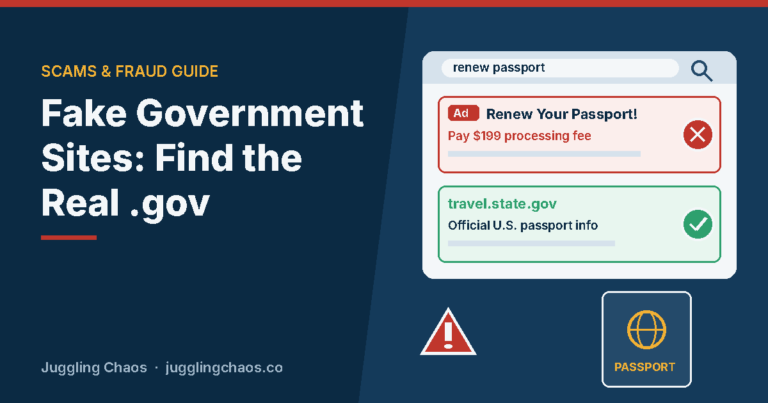
Search ads can lead to lookalike passport, records and bill-pay sites that add fees or take your personal information. Here is how to find the real office or company, and what to do if you already paid a lookalike.
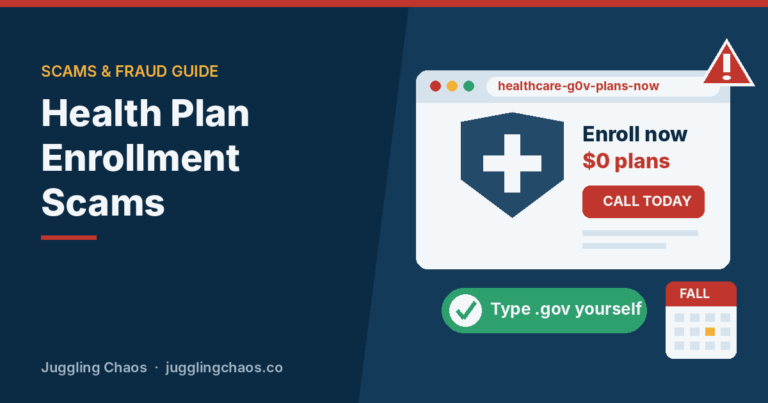
Scammers copy HealthCare.gov and Medicare.gov, buy search ads and call with fake offers during open enrollment. Here are the dates, the warning signs, and how to choose a plan safely.
Scammers can copy a loved one’s voice from a short clip and call in a fake emergency. Here is how the scam works, a family code word plan, and what to do in the moment.
Imposter scams start with a call, text, email, or ad that looks official, then push you to pay fast in a way that is hard to undo. Here are the warning signs, a family rule, and what to do if you already paid.