Rental Listing Scams: How to Spot a Fake Rental Before You Pay
A rental listing scam is a fake ad for an apartment, house or vacation rental. Sometimes the place doesn’t exist. More often it’s a real home whose photos and description were copied from an honest listing and reposted with the scammer’s phone number or email. The goal is to collect an application fee, a deposit or the first month’s rent before you find out, and sometimes to collect your personal information too.
This guide is for anyone looking for a place to live or a place to stay on a trip, and for family members helping an older relative move or book a getaway. The advice below was checked against Federal Trade Commission (FTC) consumer advice on October 24, 2026.
How rental listing scams work
The FTC describes two main versions.
- Hijacked real listings. A scammer copies a real rental ad, swaps in their own contact details, and posts it on another site. With vacation rentals, the FTC notes that several people can end up booked for the same property, and none of them paid the real owner.
- Listings for places that aren’t for rent. The ad might be for a home that’s actually for sale, a home that’s already occupied, or an address that doesn’t exist. The rent is usually low and the features appealing.
Either way, the scammer usually wants money before you’ve seen the inside of the place or signed anything real. That might be an application fee, a security deposit, first month’s rent, or a vacation booking charge. Some also ask for your Social Security number, a photo of your driver’s license, or pay stubs, which can be used for identity theft. The FTC also warns about “landlords” who ask for a screenshot of your credit score so they can steer you into a paid credit monitoring service with recurring fees.
Warning signs
- The rent is well below what similar places cost. The FTC says below-market rent, especially for a premium property, can be a sign of a scam.
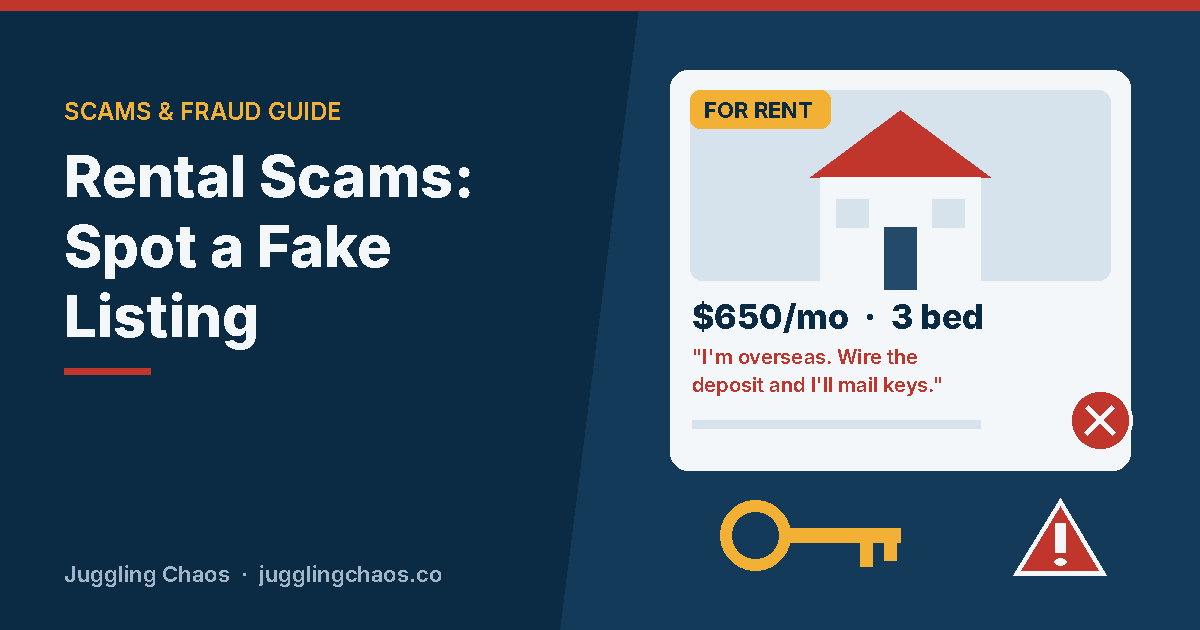
- The owner can’t show you the place. They’re out of the country, traveling for work, or have some other reason they can’t meet you or let you in.
- You’re pushed to decide right now. “Other people are interested, so send the deposit today to hold it.” The FTC’s advice is to walk away.
- They want an unusual payment method. Wire transfer through a service like Western Union or MoneyGram, gift cards, cryptocurrency or cash. The FTC says anyone who demands that you pay these ways is a scammer. For vacation rentals, the FTC also says to be suspicious of a request to pay through a payment app.
- The same home shows up with a different owner. If other ads for the same address list a different person or company, that’s a strong sign one of them is fake.
- The property is listed for sale. The FTC calls a home that’s actually listed for sale, not for rent, a major red flag.
How to protect yourself
- Search the address. Look it up along with the owner’s or rental company’s name. If other listings for the same address show a different owner or company, it’s probably a scam.
- Check the company’s own website. If a property management company or vacation rental company is named, go to its website directly. If the property isn’t listed there, the FTC says the ad is likely a scam.
- Look for complaints. Search the owner’s or company’s name with words like “complaint,” “review” or “scam,” and read what other renters say.
- See it in person if you can. If you can’t, ask for a live video tour. Be aware that the FTC warns scammers can fake self-guided tours, so a tour alone doesn’t prove the person owns the home.
- Get the terms in writing before you pay. Ask for the lease or rental contract, plus the cancellation and refund policy. If you can’t get them, walk away.
- Pay in a way you can dispute. Never pay by wire transfer, gift card or cryptocurrency. Those work like cash, and money sent that way is usually gone for good.
- Keep personal details back until you’ve agreed to rent. The FTC notes that landlords typically pull credit reports themselves, so you shouldn’t need to send a screenshot.
How to check that a landlord or property manager is real
- Private landlords: look up the property in your city or county tax assessment records, which show who owns it. Then ask to see the landlord’s ID and make sure the name matches.
- Agents and property managers: ask for a business card from the company that owns or manages the property. Contact that company yourself, using a phone number or website you found on your own, and confirm the agent works there. Check the agent’s ID against what the company tells you.
- Someone “working with the owner”: don’t give personal or financial information to a go-between. Contact the owner or company directly using information you already have.
- Vacation rentals: confirm the address actually exists, for example with a map search. If it’s a resort or condo building, call the front desk and ask them to confirm the unit and the details in your contract.
Vacation rentals and hidden fees
Before paying a vacation rental deposit, read the full contract and make sure the cancellation and refund rules are spelled out.
Fees can cost you too. According to the FTC, the price shown for short-term lodging should include all required fees the seller knows about upfront, and any fees that can’t be calculated in advance, such as some taxes, must be disclosed before you’re asked to make final payment. For apartments, the FTC suggests asking whether the advertised rent includes mandatory monthly fees and asking the agent to confirm every charge beyond rent in writing. Our guide to spotting hidden fees has more.
If you already paid or shared information
Act quickly, and work through what applies:
- You paid by credit card: call the number on the back of the card or use your online account. Report the fraud and ask for a refund.
- You paid by debit card: contact your bank or credit union right away and ask for a refund.
- You sent a bank transfer: tell your bank or credit union immediately and ask them to reverse the payment.
- You used a wire transfer service: contact the company right away, tell them a scammer tricked you into sending the money, and ask for a refund.
- You used a payment app: report it to the app and ask them to reverse the payment.
- You paid with gift cards: call the card issuer using the number on the back, explain that a scammer got the card number and PIN, and ask for a refund. Keep the cards and receipts.
- You paid with cryptocurrency: contact the exchange or crypto ATM operator, say the transaction was fraudulent, and ask them to reverse it.
- You mailed cash: call the U.S. Postal Inspection Service at 1-877-876-2455. For a fee, they may be able to intercept a domestic package that hasn’t been delivered yet.
- You gave your Social Security number: if it’s been misused, report it at IdentityTheft.gov and follow the recovery plan. You can also consider a credit freeze.
Then report the scam. The FTC suggests telling your local police, the website where the ad appeared, your state attorney general, and the FTC at ReportFraud.ftc.gov.
Helping an older parent with rentals
- Offer to look over any listing, lease or booking before they send money, especially for a move or a long seasonal stay.
- Agree on a simple rule: “We don’t pay a deposit by wire, gift card or crypto, and we don’t pay for a place nobody has checked.”
- Help them look up the owner in county property records, or call the building’s front desk together.
- Make sure they know who to call first if something goes wrong: their card company or bank, then you.
Checklist
- The address has been searched with the owner’s or company’s name.
- Someone has seen the place in person or confirmed it through the owner, company or front desk.
- The lease or rental contract, including refund rules, is in writing before any payment.
- Payment is by a method you can dispute, never wire, gift card or crypto.
- ReportFraud.ftc.gov and your card company’s phone number are saved.
FAQ
Is it normal to pay an application fee before seeing an apartment?
Application fees are common, but paying any money before you’ve confirmed the person has the right to rent the home is risky. Check ownership through county tax records or the management company first, and don’t pay by wire transfer, gift card or cryptocurrency.
The landlord says they’re overseas and will mail me the keys. Is that a scam?
It’s one of the most common warning signs. The FTC notes that scammers often say they’re out of the country or make excuses to avoid showing the property. Ask a local agent, a friend or the building manager to confirm the home is really for rent before you send anything.
Why would a landlord want a screenshot of my credit score?
A real landlord usually runs a credit check themselves. The FTC warns that some scammers ask for a credit score screenshot to push you into signing up for a paid credit monitoring service with recurring fees.
Is a video tour enough to prove a listing is real?
It helps, but it isn’t proof. The FTC says scammers can fake self-guided tours. Pair any tour with an ownership check, such as county property records, the management company’s own website, or a call to a resort’s front desk.
Related guides
- How Scammers Tell You to Pay (FTC Video Guide)
- Hidden Fees: How to Spot Charges You Never Agreed To
- Gift Cards Are Only for Gifts
Sources
- Federal Trade Commission, “Rental Listing Scams,” consumer.ftc.gov, accessed October 24, 2026.
- Federal Trade Commission, “Avoid Scams When You Travel,” consumer.ftc.gov, accessed October 24, 2026.
- Federal Trade Commission, “Moving this summer? Watch for rental scams,” consumer.ftc.gov, accessed October 24, 2026.
- Federal Trade Commission, “What To Do if You Were Scammed,” consumer.ftc.gov, accessed October 24, 2026.
This is general information, not legal or financial advice. If you lost money, contact your bank or payment provider right away and report the scam at ReportFraud.ftc.gov.
Get one safety checklist a month
Juggling Chaos Monthly is free: one 15-minute checklist, one scam warning sign, and our newest guides. Sign up on the newsletter page.
Juggling Chaos will never ask for a password, payment, gift card, or verification code. Guides are general information, not legal or financial advice; see our Disclaimer and Terms and Editorial Policy.